Half the calls we get in Cape Coral that aren't about a leak are about a letter from the insurance company. Here's the law and the practice behind it, as of 2026.
The 15-year rule
Florida Statute 627.7011 (from the 2022 reforms) says an insurer may not refuse to write or renew a homeowner's policy solely because the roof is under 15 years old. Once the roof passes 15, the insurer can require an inspection — and if that inspection shows the roof has at least five years of useful life remaining, they still can't refuse coverage based on age alone. Roof age stops being a reason by itself; roof condition takes over.
In practice: a 12-year-old roof shouldn't be getting age letters. A 17-year-old roof in good shape needs a roof condition inspection with photos showing five years of life left. A 22-year-old three-tab shingle roof with granule loss and lifting tabs probably can't get that letter honestly, and the carrier is within its rights.
Citizens' rules
Citizens Property Insurance, the state-backed carrier a lot of Lee County ended up with after 2022, sets hard limits regardless of condition: full roof replacement documentation at 25 years for shingle and other coverings, and 50 years for tile, slate, clay, concrete tile and metal. Private carriers vary, but most follow the 15-year statute with their own underwriting on top, and a few won't write shingle roofs over 10–12 years old at all.
What the inspection looks at
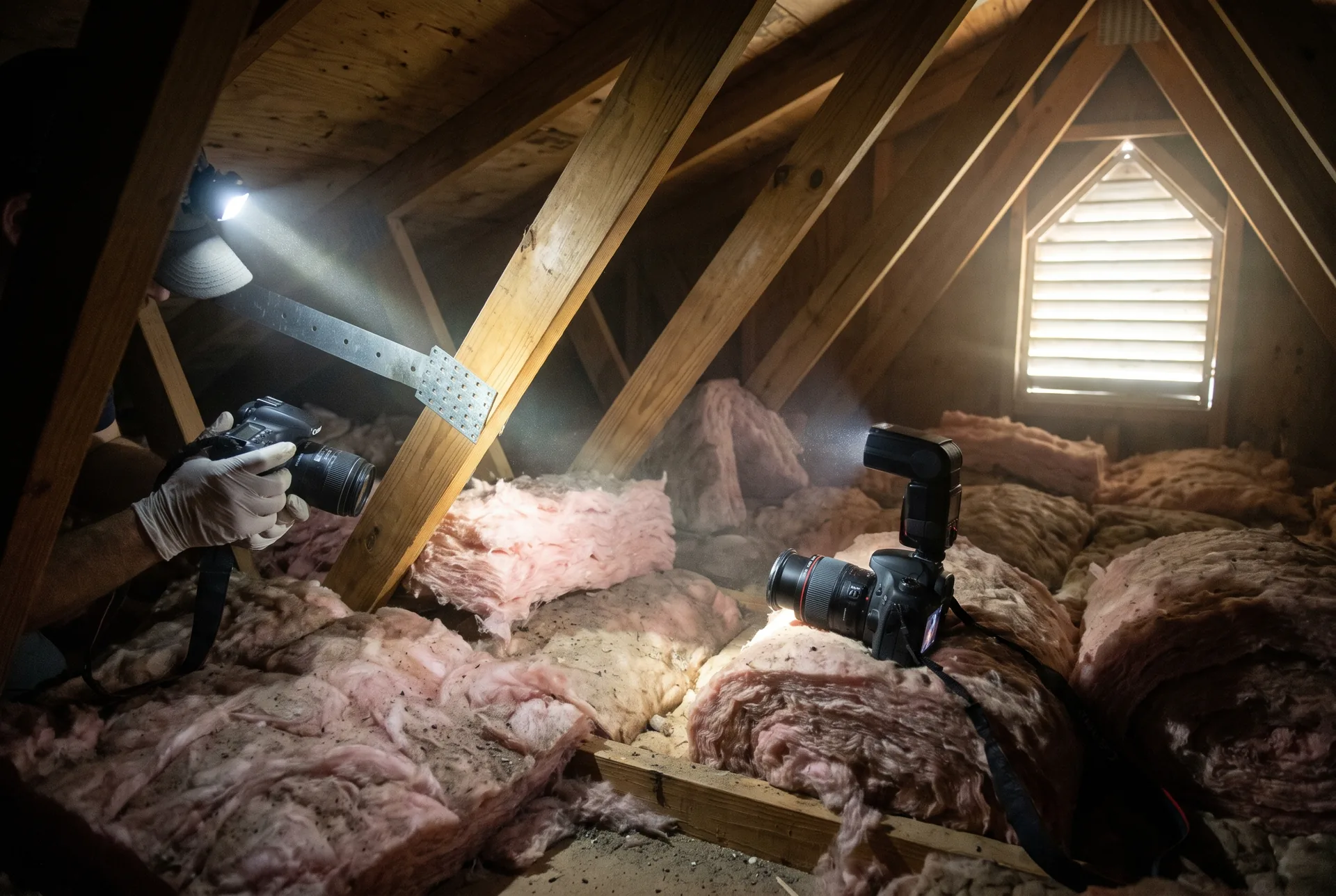
A roof condition inspection (sometimes bundled into a "4-point") photographs the covering, flashing, penetrations, decking from the attic and any moisture, then states remaining useful life. A wind mitigation inspection is a different form — OIR-B1-1802 — that records the year the roof was permitted, how the deck is nailed, how the roof ties to the walls, the roof shape, whether there's a secondary water barrier, and opening protection. Every "yes" is a credit the carrier must offer. The two together are what an underwriter wants on a Cape Coral home.
Your options when the letter comes
1. Inspect and document
If the roof is sound, an honest remaining-life letter with photos settles it. We do the inspection free; we write the letter when it's true.
2. Repair what's wrong
Sometimes a roof fails the inspection on a fixable item — a few slipped tiles, failed boots, a lanai tie-in. Fix it, re-inspect, done.
3. Re-underlay a tile roof
A permitted re-underlayment that keeps your tile is a new roof in the carrier's eyes: new permit date, current code, fresh wind mitigation. About half the cost of new tile.
4. Replace
A new code-built roof resets the 15-year clock and earns the full wind credits, which often pay for a good part of it over the life of the roof. Metal and tile also push Citizens' limit out to 50 years.
5. Shop the carrier
Some carriers are stricter than the statute. An independent agent who writes several companies can sometimes place a 16-year-old roof with a good inspection where the current carrier won't.
What resets the clock
The permit date. A re-roof permitted and closed with the City of Cape Coral or Lee County is the record insurers use. Unpermitted work doesn't count, and neither does a "roof-over" that isn't a re-roof under the code. This is one of the reasons we pull a permit on every replacement and every re-underlayment.
This is general information about Florida law as of 2026, not insurance advice. Your policy and your carrier's underwriting rules govern; ask your agent.
Related questions
My roof is 14 years old and I got a non-renewal for roof age. Is that legal?
Under F.S. 627.7011, an insurer can't refuse to renew solely because the roof is under 15. Ask the carrier in writing for the reason; if it's age alone, your agent or the Florida Department of Financial Services consumer line can help. If the letter cites condition, an inspection is the next step.
What counts as five years of remaining life?
The inspector's professional judgment based on the covering's condition — granule loss, brittleness, lifted tabs on shingle; underlayment condition and slippage on tile; fastener and seam condition on metal — plus flashing, decking and moisture. We only write the letter when we'd stand behind it.
Does a tile re-underlayment count as a new roof for insurance?
Yes, when it's permitted as a re-roof. The permit date is what the carrier records, and the wind mitigation form gets filled out on the new underlayment and attachment.
How much can wind mitigation credits save?
It varies by carrier and home, but the combined credits commonly take 20% or more off the wind portion of the premium, and on some homes considerably more. A new code-built roof earns most of them at once.
Will Citizens insure my 30-year-old tile roof?
Citizens allows tile and metal to 50 years, so a sound 30-year-old tile roof can qualify with an inspection — but the underlayment at 30 years is usually the real problem, and a re-underlayment is often the honest answer.
Do you do the inspection even if I don't hire you for a roof?
Yes. The roof condition inspection is free and the report is yours; the wind mitigation form is $99–$150 standalone.